The final mission of Globemaster 49-244 began when the pilots and crew set off on March 17, 1951, for Tinker Air Force Base in Oklahoma. The plane returned with two empty KB-29 aerial refueling tanks, each of which measured slightly larger than a Fat Man casing. After returning to Walker Air Force Base, the plane sat for several days. On March 21, 1951, 29 Strategic Air Command officers and airmen boarded the plane and departed for Barksdale Air Force Base in Louisiana, the future home of America's nuclear-bomber fleet. At Barksdale, Brig. Gen. Paul T. Cullen and three staffers boarded, bringing to 53 the total number of passengers and crew aboard.
On March 22, 1951, the Globemaster departed for Limestone Air Force Base in Maine. There, the plane refueled while the pilots, crew and passengers rested, dined and received a detailed security briefing that included emergency bailout and survival instructions. A secret Strategic Air Command training mission already was in progress over Europe to practice rendezvous procedures between bomb-carrying B-29s, KB-29 aerial refueling tanker planes and other planes whose job was to emit electronic countermeasures to foil radar tracking by enemy planes. The standing orders during the training mission, which presumably applied to the Globemaster passengers en route to join the exercise, was to evade enemy capture and destroy sensitive equipment if there was a risk of it being seized by the enemy. The only forces deemed hostile to U.S. personnel in Europe were the Soviets.
The Globemaster departed Limestone and overflew Gander, Newfoundland, en route across the Atlantic. The crew performed hourly, scheduled check-in calls with Gander and weather ships interspersed in the North Atlantic. But when the plane was roughly 800 miles from its destination -- Mildenhall Royal Air Force Base north of London -- all radio communication ceased. There were no reports of any problems on board the plane. After missing its hourly radio check-in, the plane took a sharp turn southward. It traveled for nearly 300 miles, steadily dropping in altitude, before ditching in the Atlantic about 700 miles southwest of the coast of Ireland.
Search planes were dispatched from Mildenhall on March 23, 1951, when the Globemaster failed to communicate or land at its scheduled arrival time. Search-plane pilots repeatedly radioed sightings of survivors in life rafts. Four such reports were radioed in a 19-hour span on March 24. But by the time rescue ships arrived at the ditching site, all they found were splintered, charred remnants of the plane's interior. The search area spanned an area the size of Kentucky.
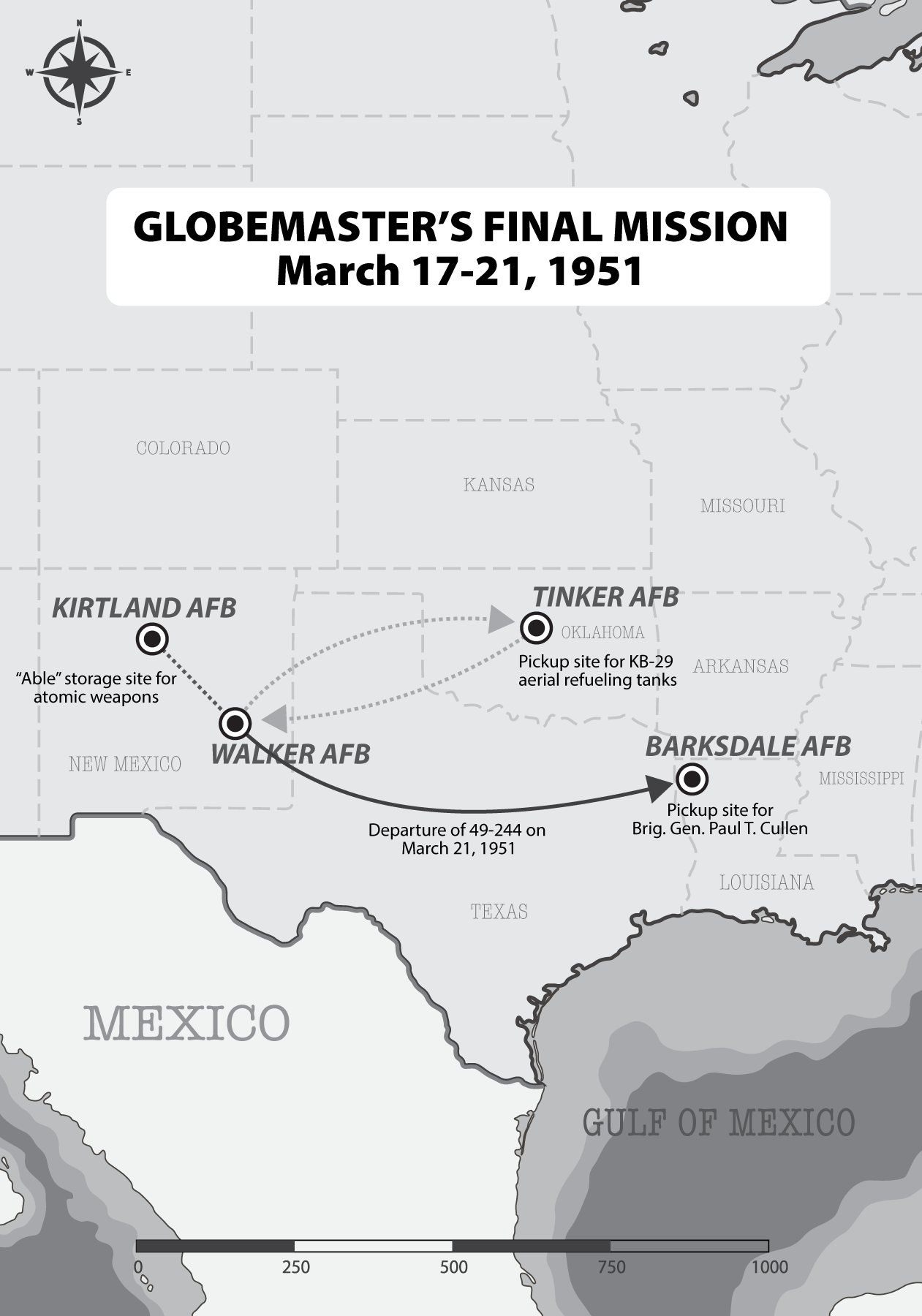 The final mission of Globemaster 49-244 began when the pilots and crew set off on March 17, 1951, for Tinker Air Force Base in Oklahoma. The plane returned with two empty KB-29 aerial refueling tanks, each of which measured slightly larger than a Fat Man casing. After returning to Walker Air Force Base, the plane sat for several days. On March 21, 1951, 29 Strategic Air Command officers and airmen boarded the plane and departed for Barksdale Air Force Base in Louisiana, the future home of America's nuclear-bomber fleet. At Barksdale, Brig. Gen. Paul T. Cullen and three staffers boarded, bringing to 53 the total number of passengers and crew aboard.
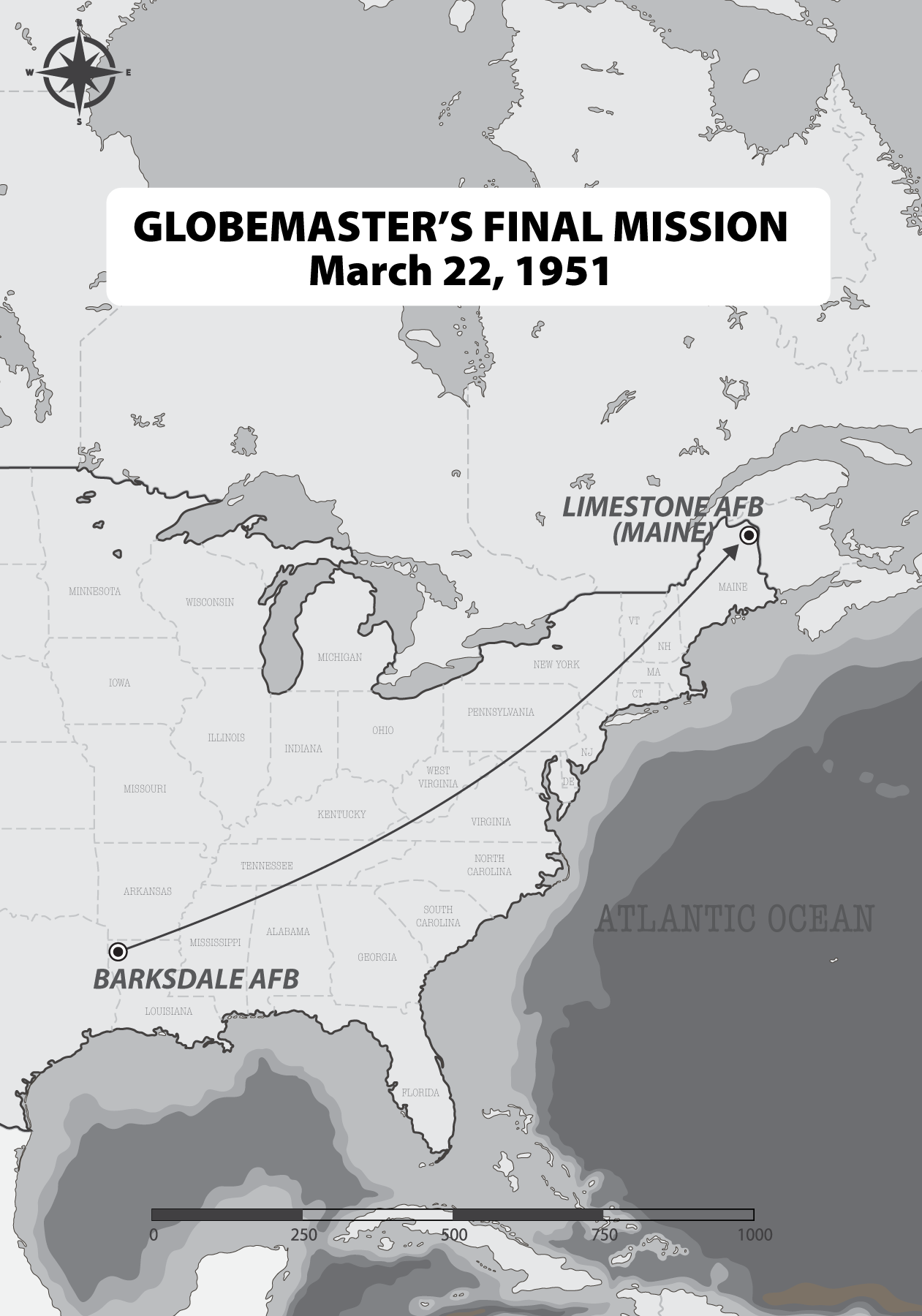 On March 22, 1951, the Globemaster departed for Limestone Air Force Base in Maine. There, the plane refueled while the pilots, crew and passengers rested, dined and received a detailed security briefing that included emergency bailout and survival instructions. A secret Strategic Air Command training mission already was in progress over Europe to practice rendezvous procedures between bomb-carrying B-29s, KB-29 aerial refueling tanker planes and other planes whose job was to emit electronic countermeasures to foil radar tracking by enemy planes. The standing orders during the training mission, which presumably applied to the Globemaster passengers en route to join the exercise, was to evade enemy capture and destroy sensitive equipment if there was a risk of it being seized by the enemy. The only forces deemed hostile to U.S. personnel in Europe were the Soviets.
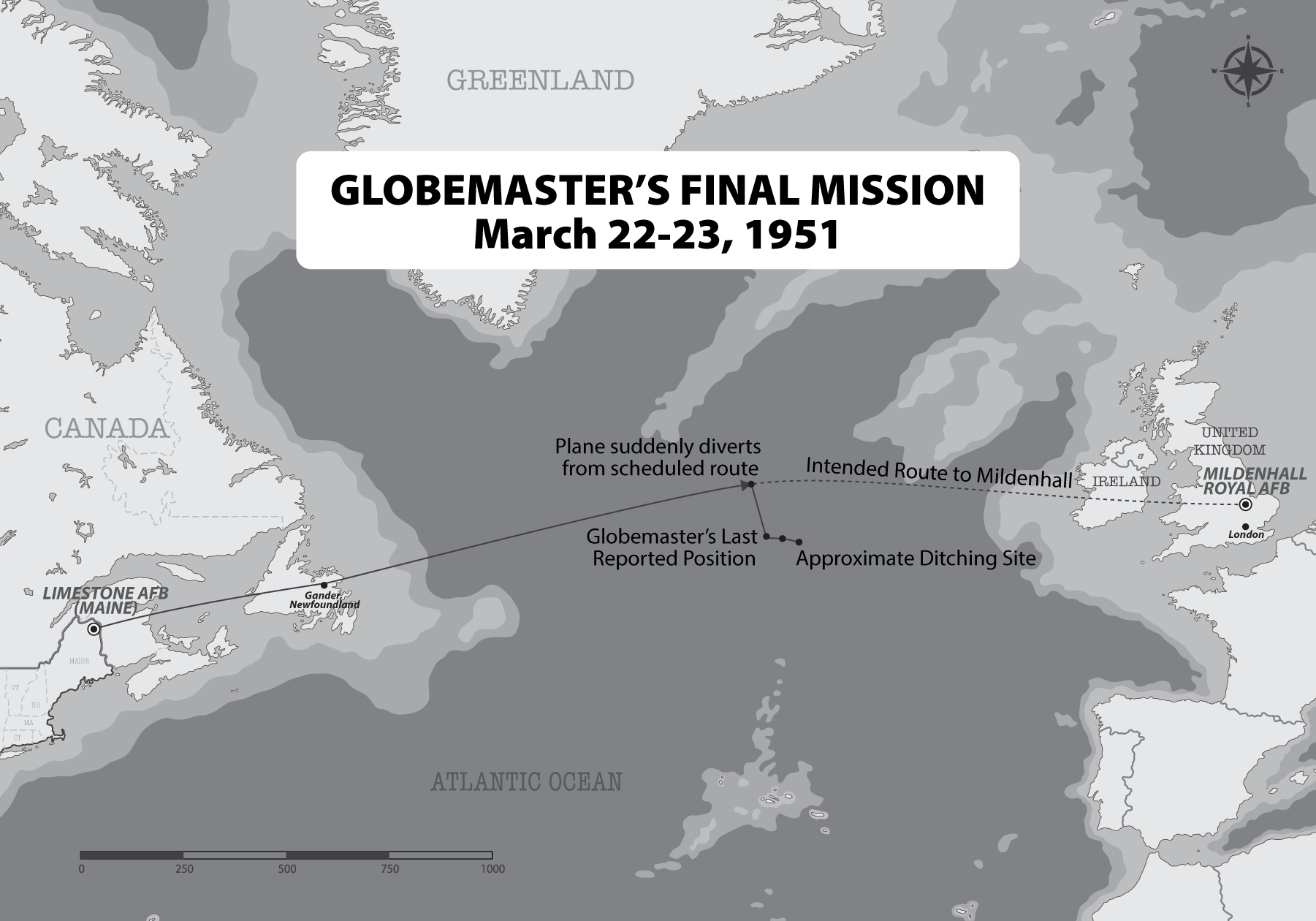 The Globemaster departed Limestone and overflew Gander, Newfoundland, en route across the Atlantic. The crew performed hourly, scheduled check-in calls with Gander and weather ships interspersed in the North Atlantic. But when the plane was roughly 800 miles from its destination -- Mildenhall Royal Air Force Base north of London -- all radio communication ceased. There were no reports of any problems on board the plane. After missing its hourly radio check-in, the plane took a sharp turn southward. It traveled for nearly 300 miles, steadily dropping in altitude, before ditching in the Atlantic about 700 miles southwest of the coast of Ireland.
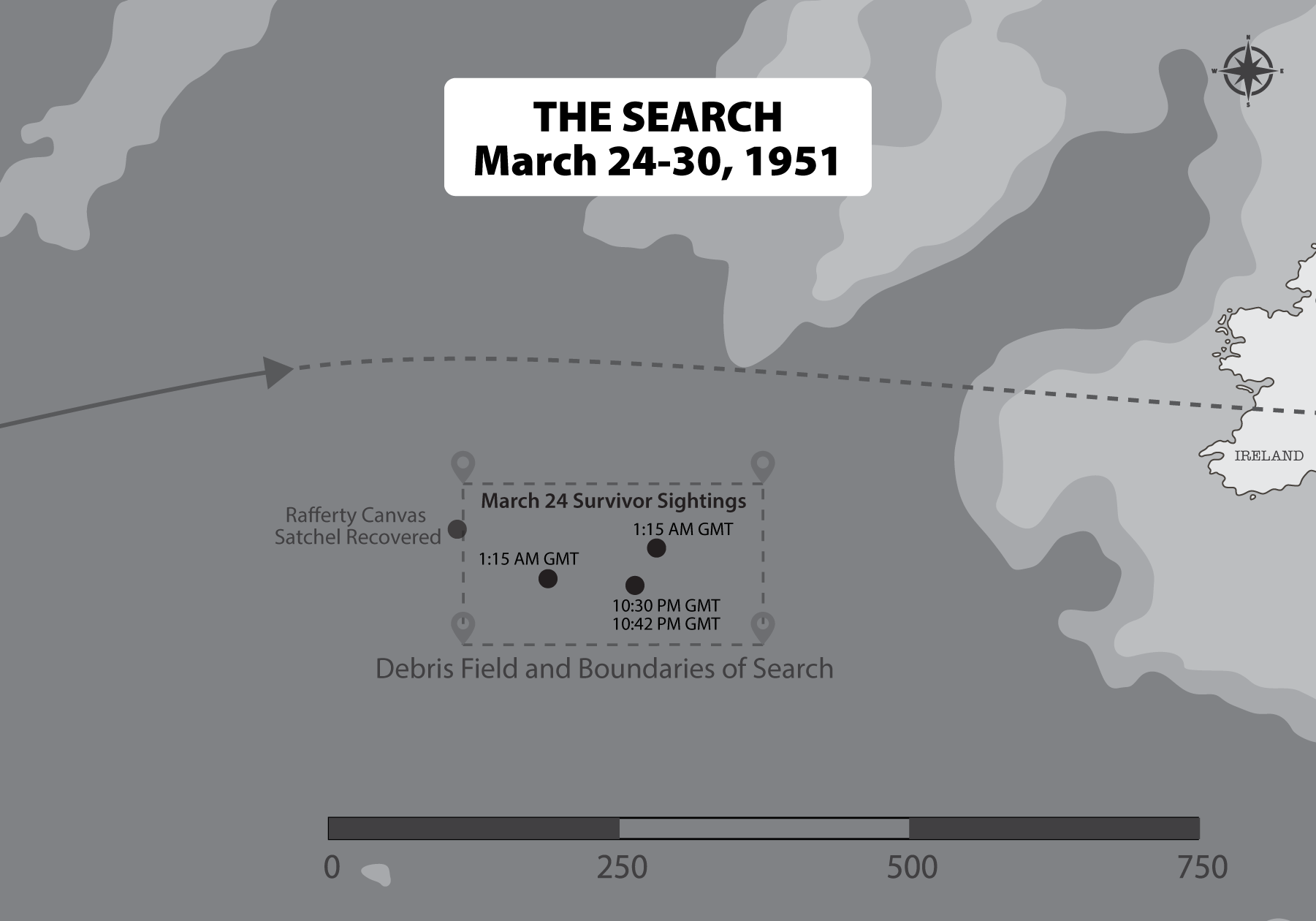 Search planes were dispatched from Mildenhall on March 23, 1951, when the Globemaster failed to communicate or land at its scheduled arrival time. Search-plane pilots repeatedly radioed sightings of survivors in life rafts. Four such reports were radioed in a 19-hour span on March 24. But by the time rescue ships arrived at the ditching site, all they found were splintered, charred remnants of the plane's interior. The search area spanned an area the size of Kentucky.