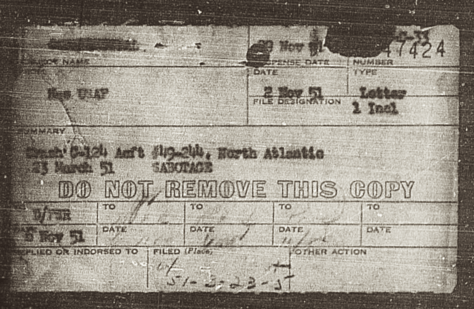
Investigations into the ditching of 49-244 focused on two potential causes. The first was that a catastrophic series of malfunctions might have been sparked by a thrown propeller part. The theory was that the part was flung at high speed through the fuselage at a point directly aligned with the communication equipment and control cables for the aircraft. This theory explained why all communication from the plane ceased as soon as it went off course, while the damaged control cables prevented the pilots from keeping the plane on course. The theory fell apart because, first, there were alternative emergency radios on board that could be operated independent of the main sysstem, and second, the severing of the control cables would have prevented the pilots from easing the plane down onto the water surface in a way that would allow at least some on board to survive the impact. Another line of investigation focused on sabotage (see photo). This investigation zeroed in on the presence in recovered pieces of the plane's decking of an explosive chemical compound that could not be traced to any item on board the aircraft. The sabotage investigation would take officials in various directions, including interviewing passengers who had been on the plane but who had disembarked before the plane made its final takeoff from Limestone air base in Maine.
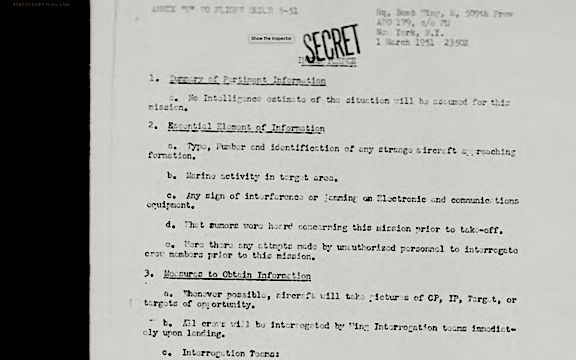
The final flight of Globemaster 49-244