The Fat Man atomic bomb, first exploded over Nagasaki in August 1945, delivered the crippling blow attributed with prompting Japan's surrender, marking the end of World War II. At the time, it was the largest bomb in the American arsenal, and its gigantic weight and girth made it particularly difficult to keep its existence secret. Doubly difficult was the transportation and loading process, because the bomb was too tall to fit under the bomb bay doors of a B-29, and it was too wide to fit through standard bomb bay doors. Special trenches, fitted with hydraulic lifts, had to be installed on a secret site on the Pacific island of Tinian for the bomb to be lowered into place. The a B-29 was backed over the trench, after which the hydraulic lifts elevated the bomb through specially designed, oversized bomb bay hatches. The mere existence of those special features was top secret at the time, meaning anyone allowed to look at or work on the special B-29 Silverplate bombers required a security clearance -- including mechanics and maintenance personnel.
The Silverplate B-29 was the name assigned to the top secret B-29s specially modified to carry atomic bombs. The openings were widened and lengthened to accommodate the girth of a Fat Man bomb, which could only be loaded through the doors by pre-placing the bomb in a trench, parking the B-29 over it, then hydraulically lifting the bomb into the plane. Silverplate B-29 pilots trained ahead of the Hiroshima and Nagasaki runs using 10,000-pound dummies, dubbed M107s. After World War II, the Air Force stopped referring to the bomb as a Fat Man and instead used M107 as a code name to disguise the fact that the bombs were being used over populated areas during training. One such training exercise occurred over Europe in March 1951, and the 53 atomic specialists aboard Globemaster 49-244 were heading to the United Kingdom when their plane ditched in the Atlantic.
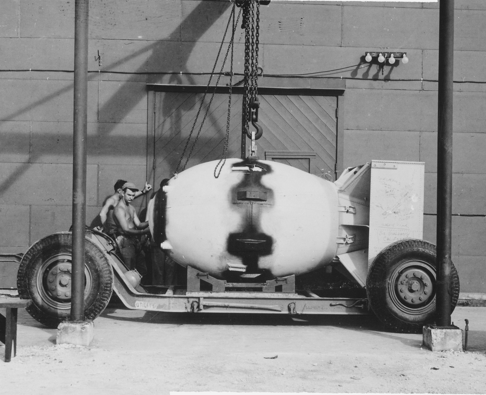 The Fat Man atomic bomb, first exploded over Nagasaki in August 1945, delivered the crippling blow attributed with prompting Japan's surrender, marking the end of World War II. At the time, it was the largest bomb in the American arsenal, and its gigantic weight and girth made it particularly difficult to keep its existence secret. Doubly difficult was the transportation and loading process, because the bomb was too tall to fit under the bomb bay doors of a B-29, and it was too wide to fit through standard bomb bay doors. Special trenches, fitted with hydraulic lifts, had to be installed on a secret site on the Pacific island of Tinian for the bomb to be lowered into place. The a B-29 was backed over the trench, after which the hydraulic lifts elevated the bomb through specially designed, oversized bomb bay hatches. The mere existence of those special features was top secret at the time, meaning anyone allowed to look at or work on the special B-29 Silverplate bombers required a security clearance -- including mechanics and maintenance personnel.
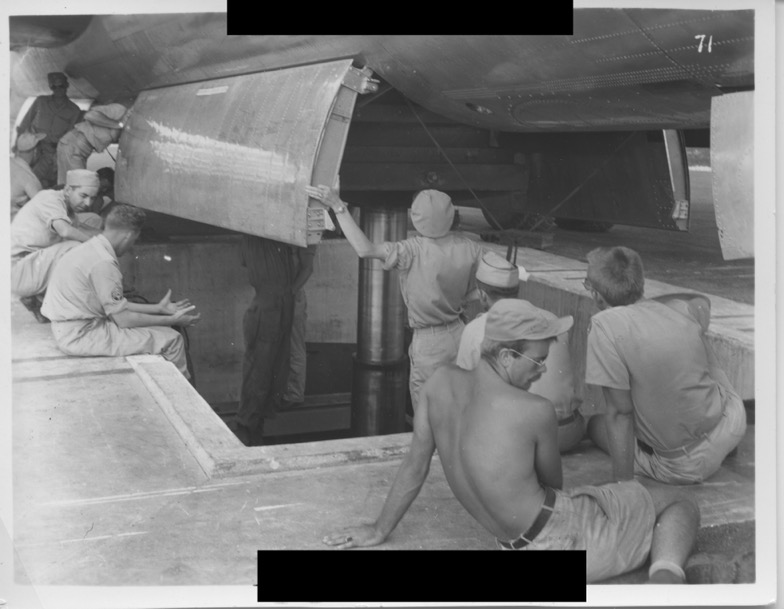 The Silverplate B-29 was the name assigned to the top secret B-29s specially modified to carry atomic bombs. The openings were widened and lengthened to accommodate the girth of a Fat Man bomb, which could only be loaded through the doors by pre-placing the bomb in a trench, parking the B-29 over it, then hydraulically lifting the bomb into the plane. Silverplate B-29 pilots trained ahead of the Hiroshima and Nagasaki runs using 10,000-pound dummies, dubbed M107s. After World War II, the Air Force stopped referring to the bomb as a Fat Man and instead used M107 as a code name to disguise the fact that the bombs were being used over populated areas during training. One such training exercise occurred over Europe in March 1951, and the 53 atomic specialists aboard Globemaster 49-244 were heading to the United Kingdom when their plane ditched in the Atlantic.